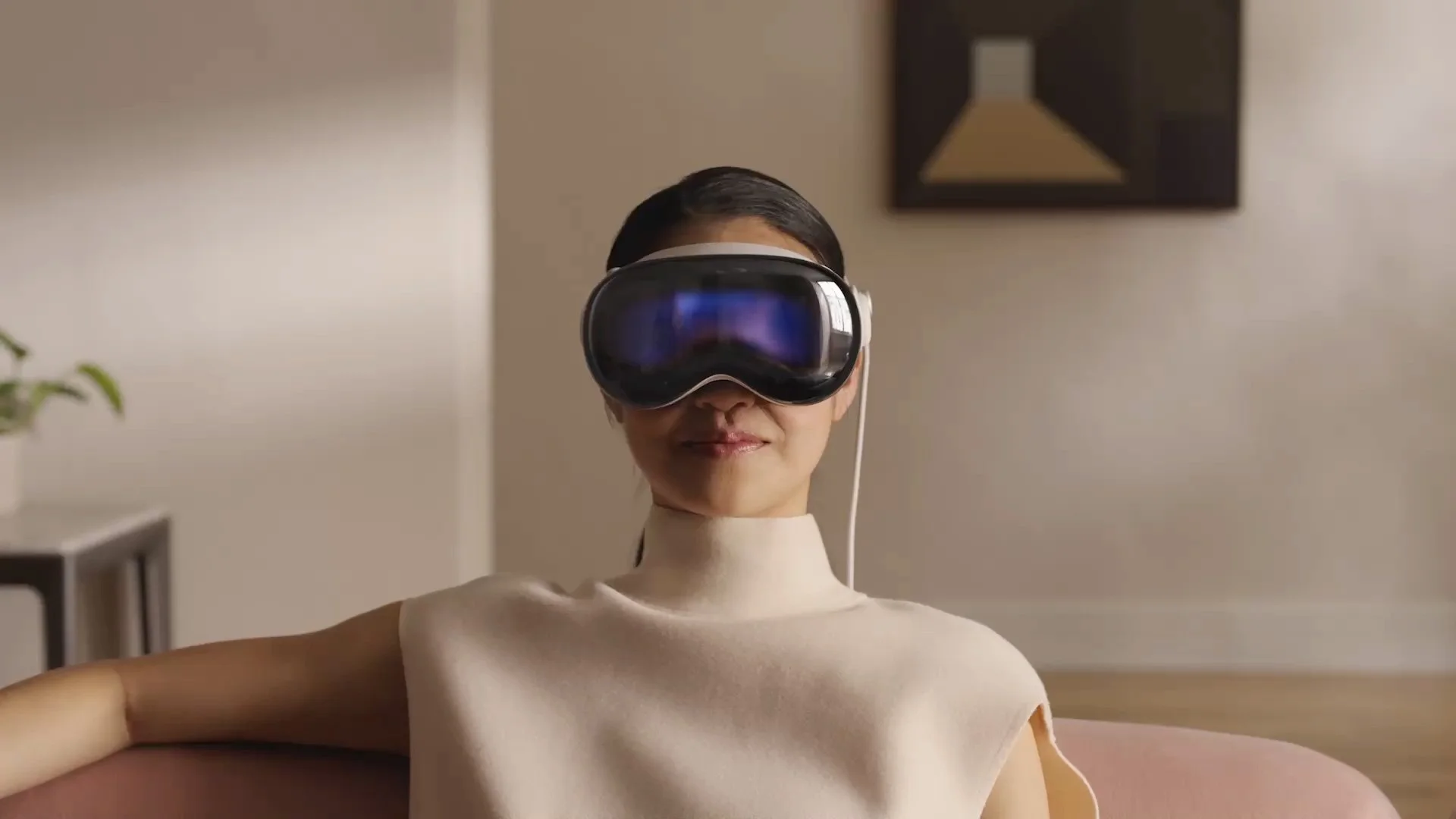
I've never worn a Vision Pro. At €3,500 I don't think many people have. I have used a Quest 2 though, and a few other headsets, so I'm not coming at this completely cold. And I've spent enough time thinking about how interfaces work to have an opinion on what Apple built and why it didn't connect.The easy observation is that the Vision Pro failed. It sold around 600,000 units across its entire lifespan. Apple quietly wound the team down earlier this year. There's no successor coming. By most measures it's a product that didn't succeed.
I think that's only part of the story.
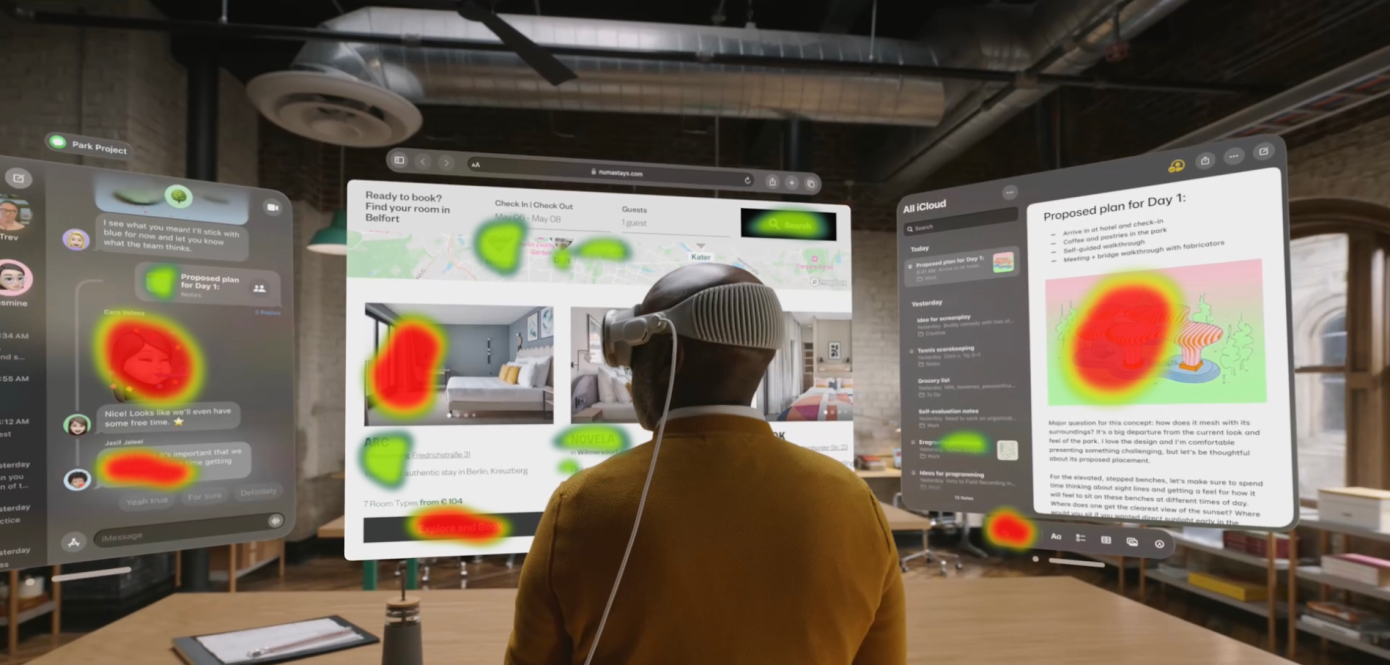
What Apple did with the Vision Pro was take 15 years of VR development, almost all of it built around gaming, and ask a completely different question. Not how do we make immersive experiences more immersive, but how do we make computing spatial. The result was visionOS, and visionOS is genuinely unlike anything else in the space. Eye tracking as your cursor. Pinch gestures instead of controllers. Floating windows sitting in the space around you. No game controller, no abstraction layer, nothing between you and the interface. The whole thing is designed around a person sitting at a desk trying to get work done. You can have your email open next to a browser next to a document, all in the air, all tracked to the physical space you're in. That's not an iteration on what Meta was doing. It's a different product category.
The problem was never the idea.
The first issue is price. €3,500 isn't a consumer product. It's barely an enterprise product. For that number to make sense you need a category of work that the Vision Pro enables and nothing else does. That category didn't exist yet. The apps weren't there, the workflows weren't there. Apple built the hardware before there was a real reason for most people to use it.
The second issue is harder to solve with better hardware. Nobody wants to sit at a desk wearing a headset right now. Not because it doesn't work, but because we haven't normalised it yet. Google Glass ran into the same wall a decade ago. The technology wasn't the problem there either. There's a gap between something being useful and people being comfortable doing it in front of other people, and that gap takes longer to close than just one product cycle.
That second issue is the one I keep coming back to as a design student. There's a version of the design process that treats success as a function of how well something performs. Does it work? Is it fast? Is the interface clean? The Vision Pro scores well on most of those. But there's a layer underneath all of that which is harder to measure and easier to ignore, will people actually be comfortable using this in the real world? Not in a design studio, not in a demo, but in an office, on a commute, in front of colleagues. A product can be technically excellent and still fail that test. Social acceptance isn't a soft consideration sitting outside the design process. It's part of the brief, and if you don't account for it early you end up with something that works perfectly,but sits in a drawer.
Apple seem to know this. The cheaper Vision Air that was supposed to bring the price down was scrapped. The team has been moved on to smart glasses, a form factor people are already comfortable with. Greg Joswiak, Apple's marketing chief, described the Vision Pro in April as "a peek into the future." Which is a polite way of saying it came to market too early.
That's the thing about the Vision Pro. The interaction model it introduced, eyes, hands, voice, no controllers, is probably closer to how we'll use computers in ten years than anything shipping today. Apple just got there before the rest of the world was ready to follow.