Air Purifier Form Development Project
Ideation and iterative prototyping to create a contemporary aesthetic for an indoor air purifier.
Role: Product Designer
|
Duration: 5 Weeks
|
Tools: Hand Sketching, Cardboard, Foam, Clay, Wire
|
Context: University Project
|
Role: Product Designer | Duration: 5 Weeks | Tools: Hand Sketching, Cardboard, Foam, Clay, Wire | Context: University Project |
Project Overview
The brief for this project required the design and construction of a portable, hand-carried indoor air purifier. The primary objective was to focus on developing a contemporary design aesthetic through iterative sketching and physical prototyping, rather than concentrating on internal mechanical components. The final deliverable had to include an air intake and air exhaust opening while showcasing high-quality physical modelling techniques.
Exploration/Discovery
The initial phase involved exploring style boards to establish a clear design language for ideation. Based on the inspiration board, I began generating 2D concepts through hand sketching. These early sketches explored various shapes, focusing on perforated textures for airflow and differing body proportions, ranging from tall cylindrical forms to shorter, domed designs. I oscillated between 2D sketches and 3D prototype development to better understand the physical presence and proportions of the designs.
Design Process
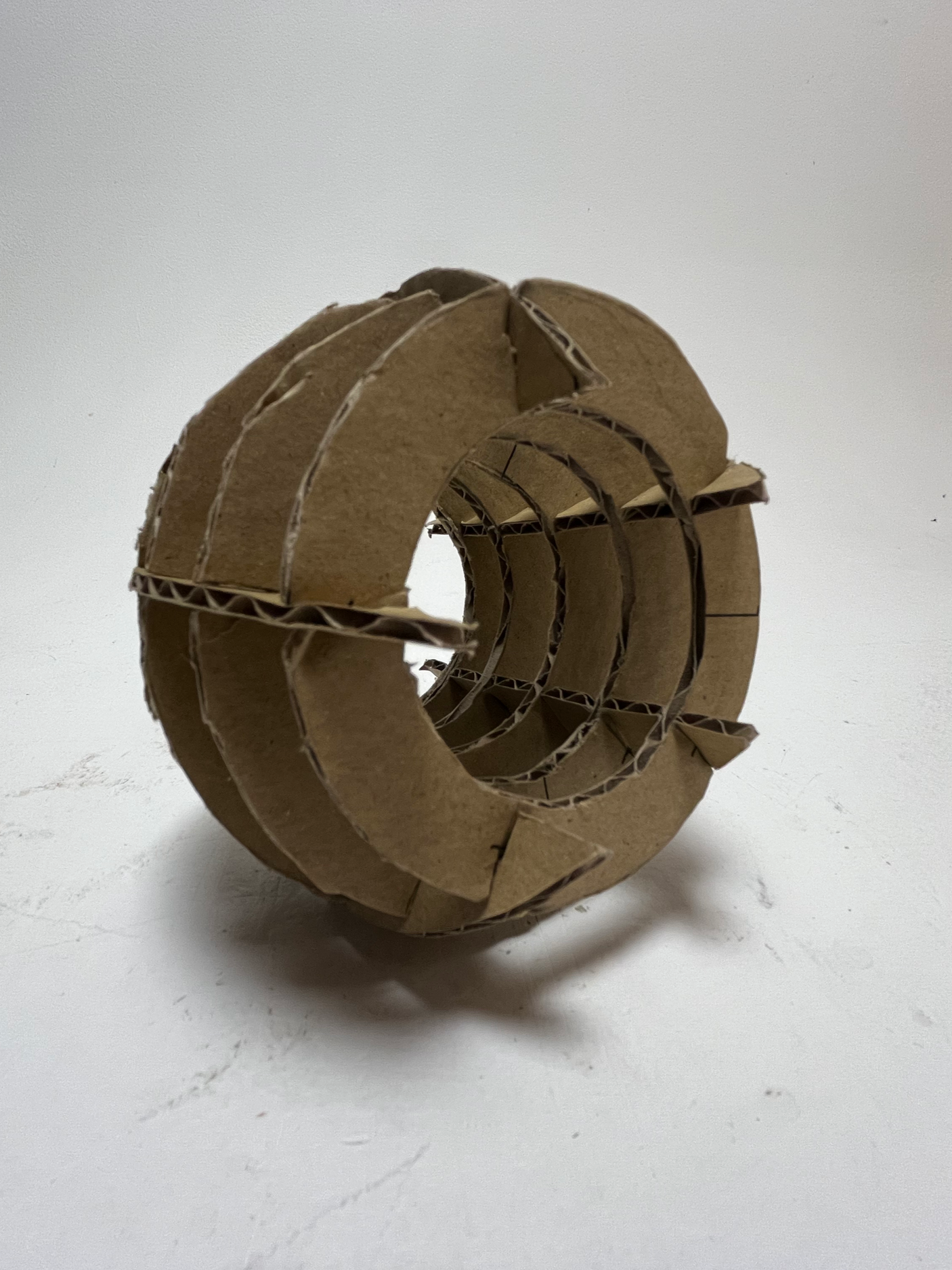
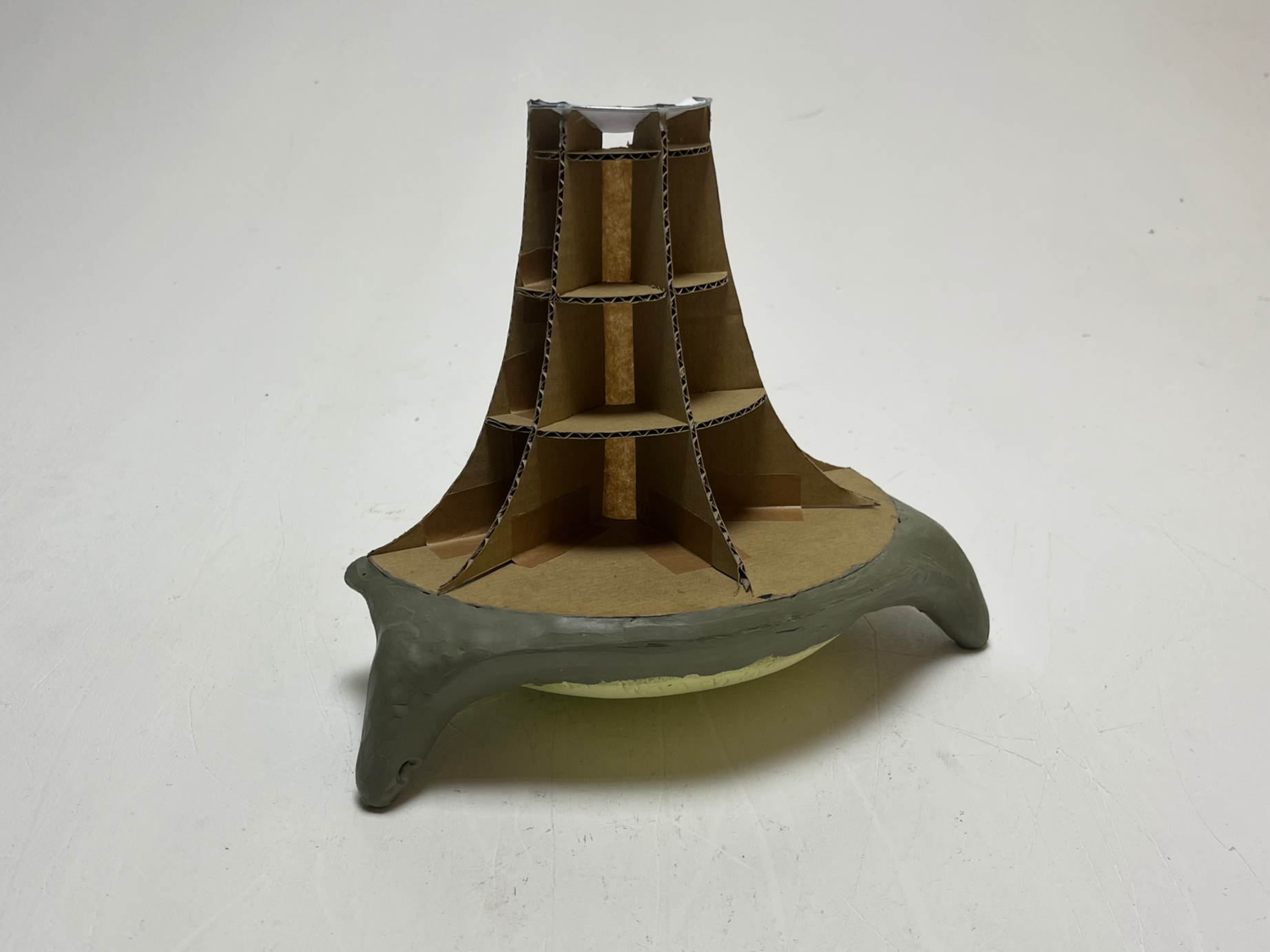
I transitioned to 3D ideation using cardboard. I first sketched individual parts, such as the base, contour pieces, and side profiles, and used them as templates to cut cardboard sections. These early prototypes utilised a press-fit assembly method with slots rather than adhesives, which provided structural stability while allowing for easy adjustments and making the models easy to recycle. After evaluating multiple options, I selected a domed, finned design as the final concept because its curved sections effectively communicated airflow, and its unbroken lines flowing into the legs suggested greater stability on a desk or table.
Final Design
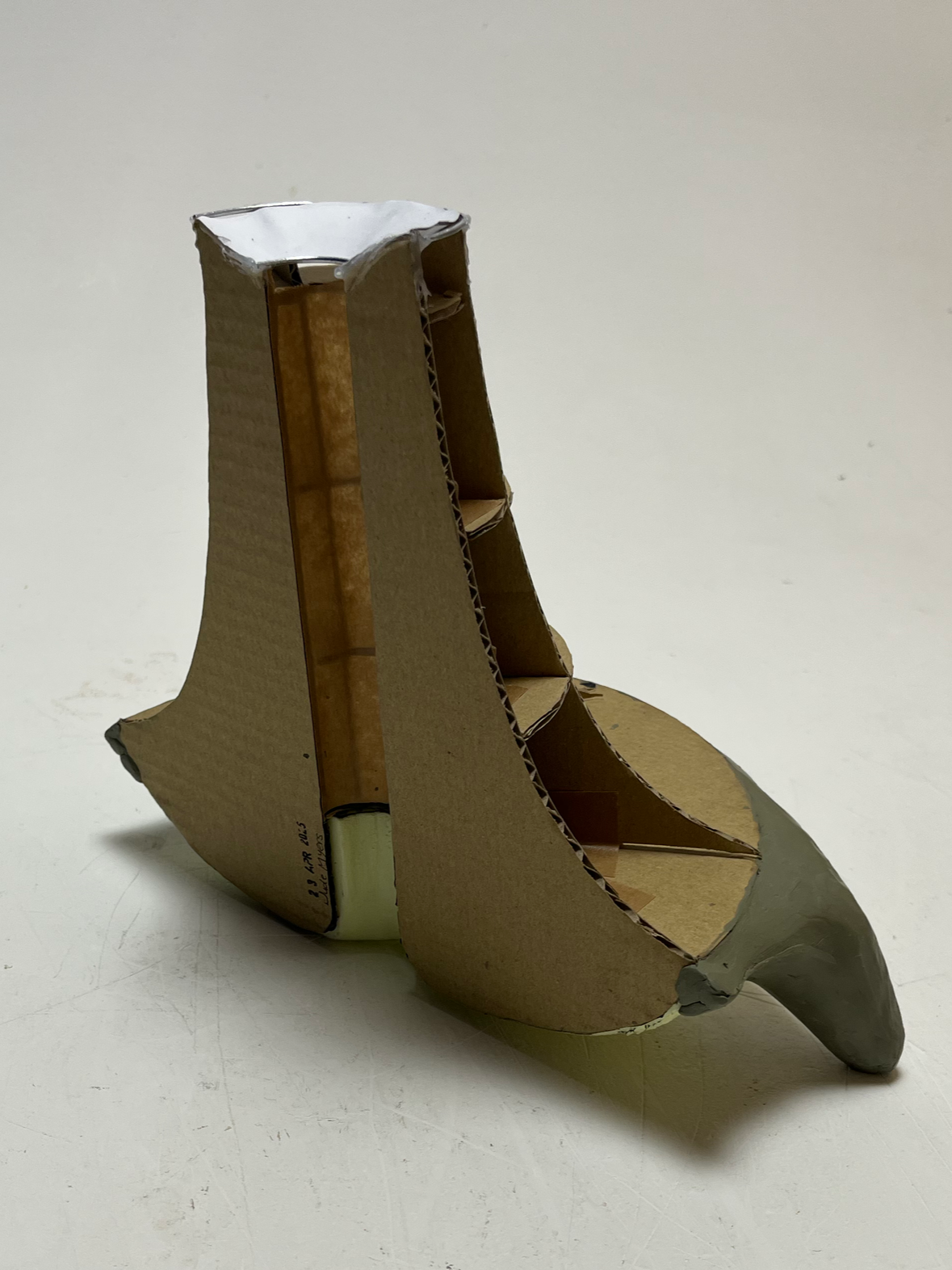
The final mixed-media model required several construction techniques. I built the main body using layered cardboard sections derived from paper templates. The domed base was shaped from a block of extruded foam, I cut the rough profile on a bandsaw and then refined the shape using files, sandpaper, and a custom gauge to ensure accuracy against my orthographic drawings. Final details included a paper cone lined with wire to represent the top surface, and legs moulded from clay, formed using my hands and a heat gun to merge the curved surfaces along the rim.
Impact & Reflection
This project emphasised the importance of looking beyond functional requirements to create a visually engaging form. A key takeaway was the critical value of physical prototyping, building the models allowed me to identify and resolve issues, such as the stability of the legs, that were not apparent during the 2D sketching phase. For the final exhibition, I created a presentation page demonstrating the airflow around the product, displaying it alongside my orthographic drawings, inspiration board, and physical prototypes. While the final design successfully achieved a contemporary aesthetic, future improvements could involve exploring more sustainable prototyping methods and further refining the user interface.