Brand Aesthetic Analysis Project
Designing a computer peripheral based on an established design brand's aesthetic
Role: Lead Designer
|
Duration: X - Y Weeks
|
Tools: Blender
|
Context: University Project
|
Role: Lead Designer | Duration: X - Y Weeks | Tools: Blender | Context: University Project |
Project Overview
The brief for this project required designing and producing a computer peripheral that visually aligned with an already established design brand. I chose Mercedes-Benz and conducted an in-depth aesthetic analysis of their automotive design language to generate a set of criteria for a pair of headphones.
Exploration/Discovery
I analysed the styling of three specific Mercedes-Benz vehicles: the W221 S-Class, the W463 G-Class, and the SLS AMG. This research allowed me to define a clear aesthetic criteria for the project. The focus was on creating smooth, continuous surfaces with angled breaks, utilising monochromatic colour schemes, and blending traditional materials with new ones. The resulting design language needed to be simultaneously utilitarian and sophisticated, masking advanced technology behind a simple, approachable form.
Design Process
I began by sketching multiple concepts for various peripherals, including keypads, flash drives, speakers, webcams, and mice, before finalising the headphone concept. To execute the digital model, I first learned Blender by completing a comprehensive donut tutorial to build the necessary technical skills. During the headphone modelling phase, I used reference sketches to maintain proportions, applied cloth simulations for the earpads and headband padding, and utilised boolean modifiers to create intersecting pivot points for the hardware.
Final Design
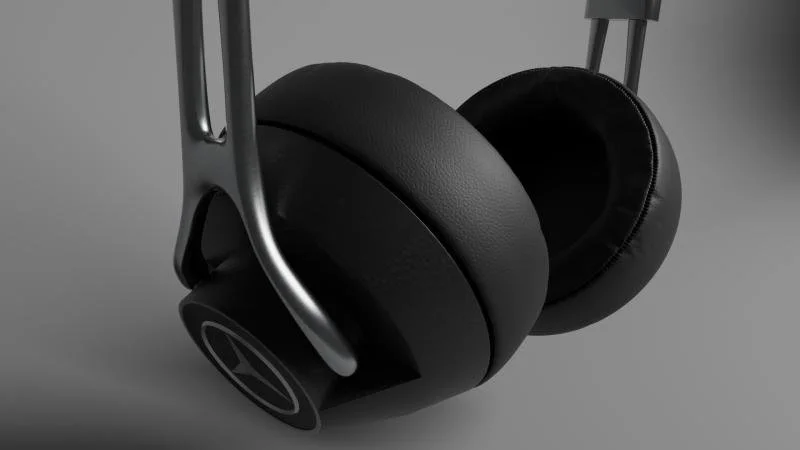
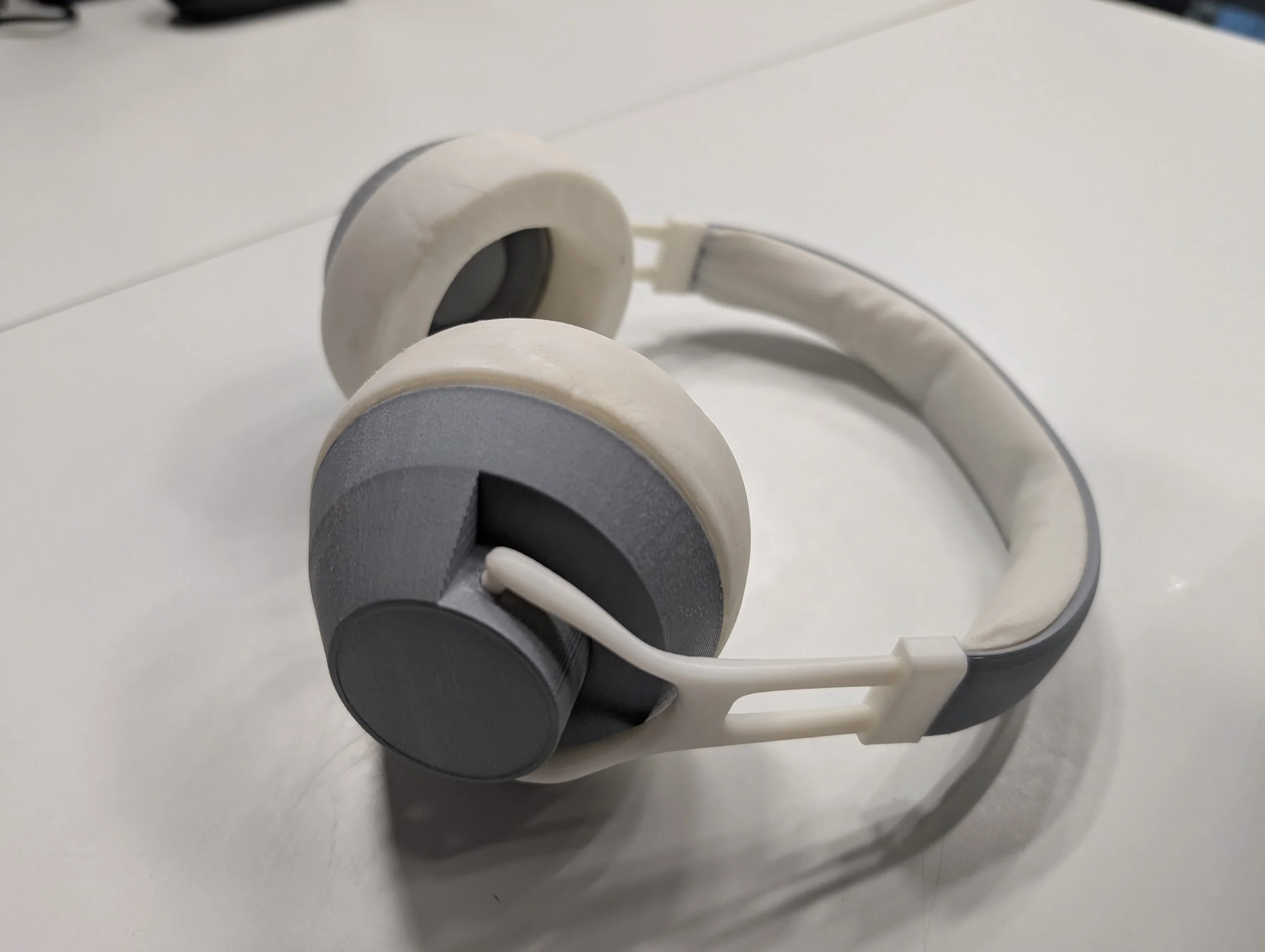
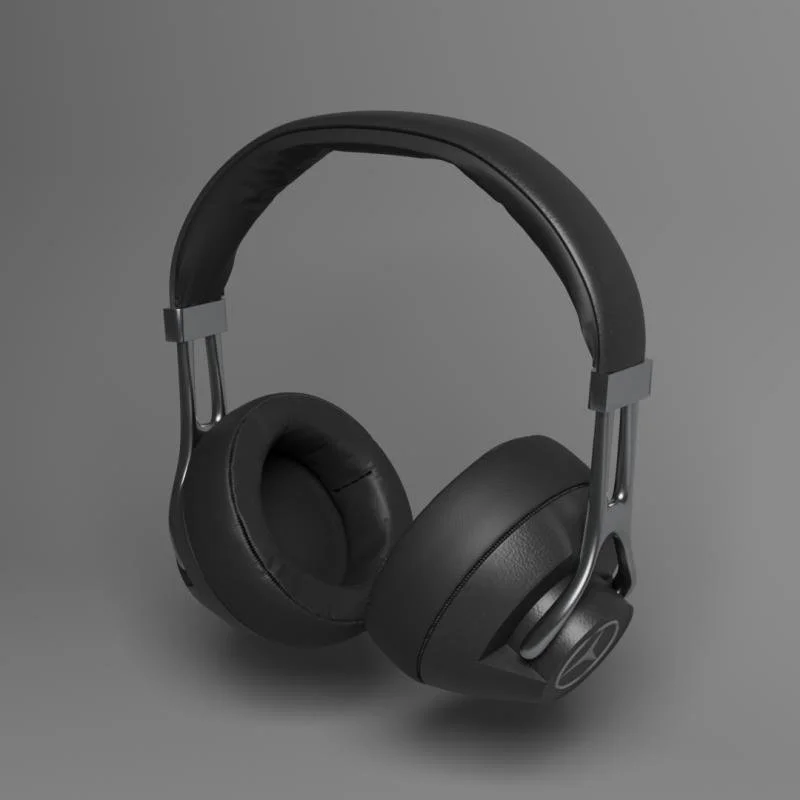
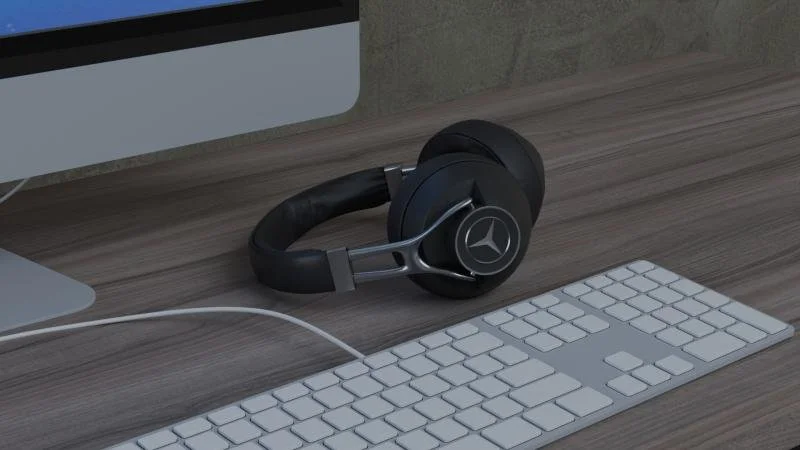
The final design was delivered through both digital renderings and a physical prototype. The digital renders showcased the headphones in material combinations commonly found in Mercedes-Benz interiors, such as polished aluminium, dark wood, and leather. For the physical prototype, I exported the components as separate STL files and printed them on my Bambu Lab A1 using two different coloured filaments to differentiate the parts. The components were then assembled using superglue and lightly sanded to obscure the layer lines.
Impact & Reflection
The completed model successfully met the design criteria and accurately translated the recognisable Mercedes-Benz styling to a consumer electronic format. While I enjoyed learning Blender, I found the UV unwrapping and texturing processes tedious and recognised a need to improve my efficiency in those areas. During the final poster exhibition, I received critical feedback on my renders, specifically regarding the difficulty of lighting dark objects. I used this feedback to revise my presentation poster, adding spotlights, adjusting light intensity, and incorporating environment textures to improve the shadowing and overall composition.