Expanding Bag: Soft Goods Project
Designing and manufacturing an adaptable, modular backpack for everyday carry.
Role: Product Designer
|
Duration: 11 Weeks (Across 3 Phases)
|
Tools: Sewing Machine, Laser Cutter, Screen Printing, Affinity Designer, Card Modelling, Gemini
|
Context: University Project
|
Role: Product Designer | Duration: 11 Weeks (Across 3 Phases) | Tools: Sewing Machine, Laser Cutter, Screen Printing, Affinity Designer, Card Modelling, Gemini | Context: University Project |
Project Overview
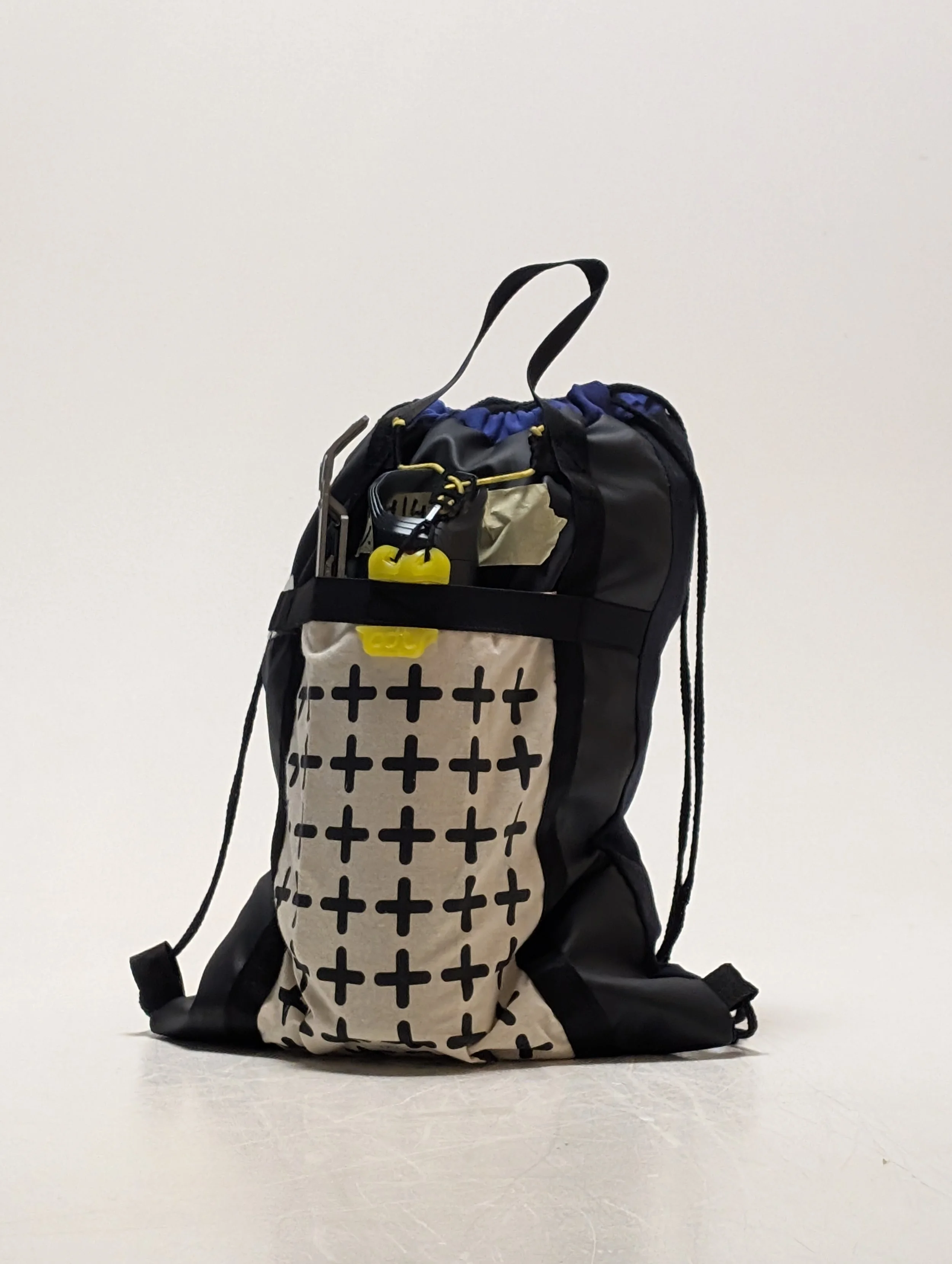
This project focused on developing an understanding of Design for Manufacture in soft goods through direct, hands-on experience with a production line and cut-and-sew manufacturing. The overarching objective was to learn fundamental construction techniques and apply them to design a custom backpack for an identified target user group. The final deliverable required planning all components, materials, and construction details for a functional bag that could not exceed maximum dimensions of 40 cm in height, 25 cm in width, and 20 cm in depth.
Exploration/Discovery
The initial direction was guided by secondary research and a refined "DRIP Carry Research Design Guide" to establish a clear set of user needs. I identified essential functional requirements for the design, which included options for carrying items comfortably, flexible internal space to accommodate various shapes, and weather protection for belongings. Additionally, the bag needed to feature a flat bottom to remain stable and upright when placed on the floor. Secondary objectives focused on adaptability, specifically calling for modular or detachable elements that could adapt to different situations and separate different types of belongings on the fly.
Design Process
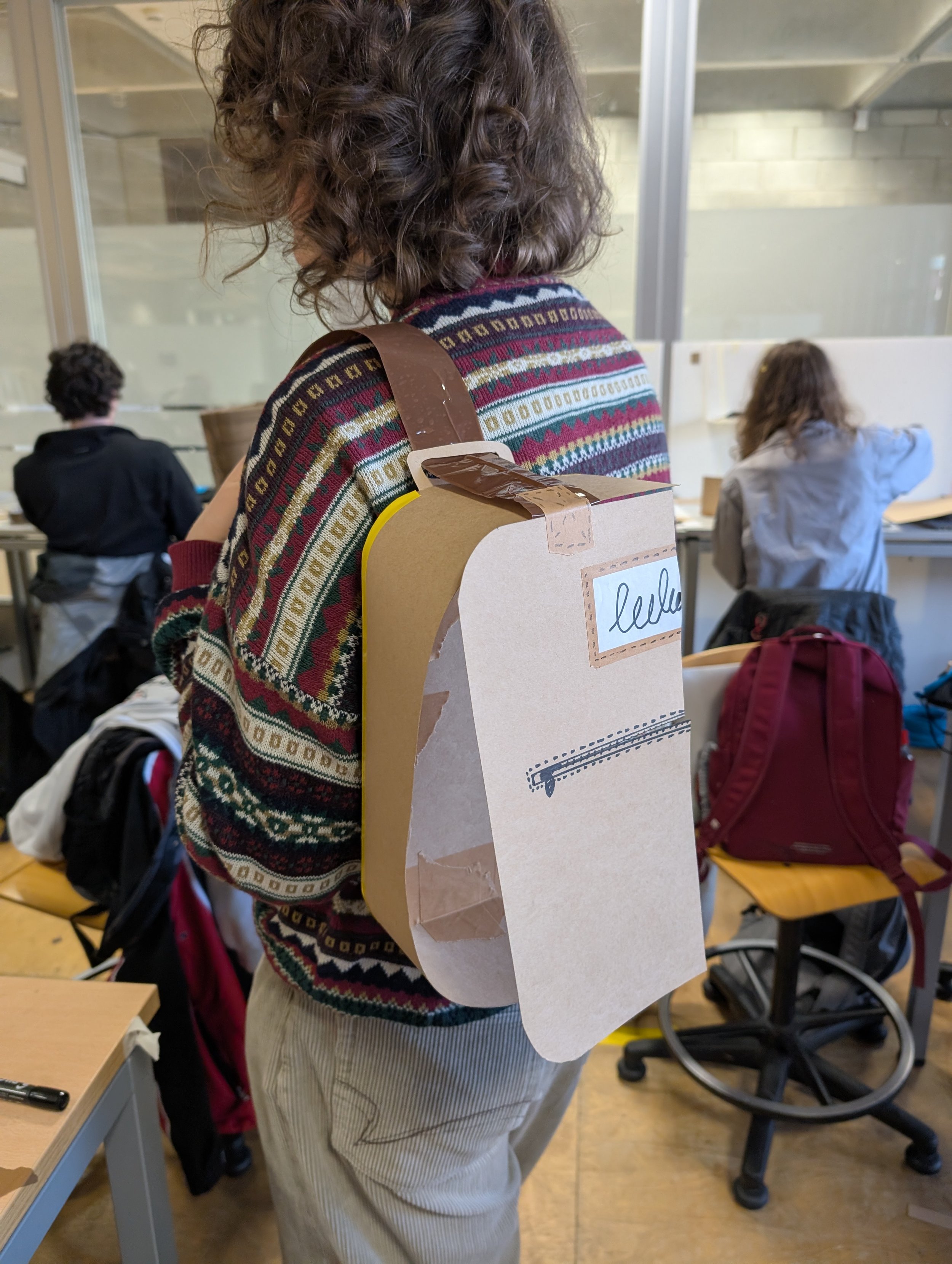
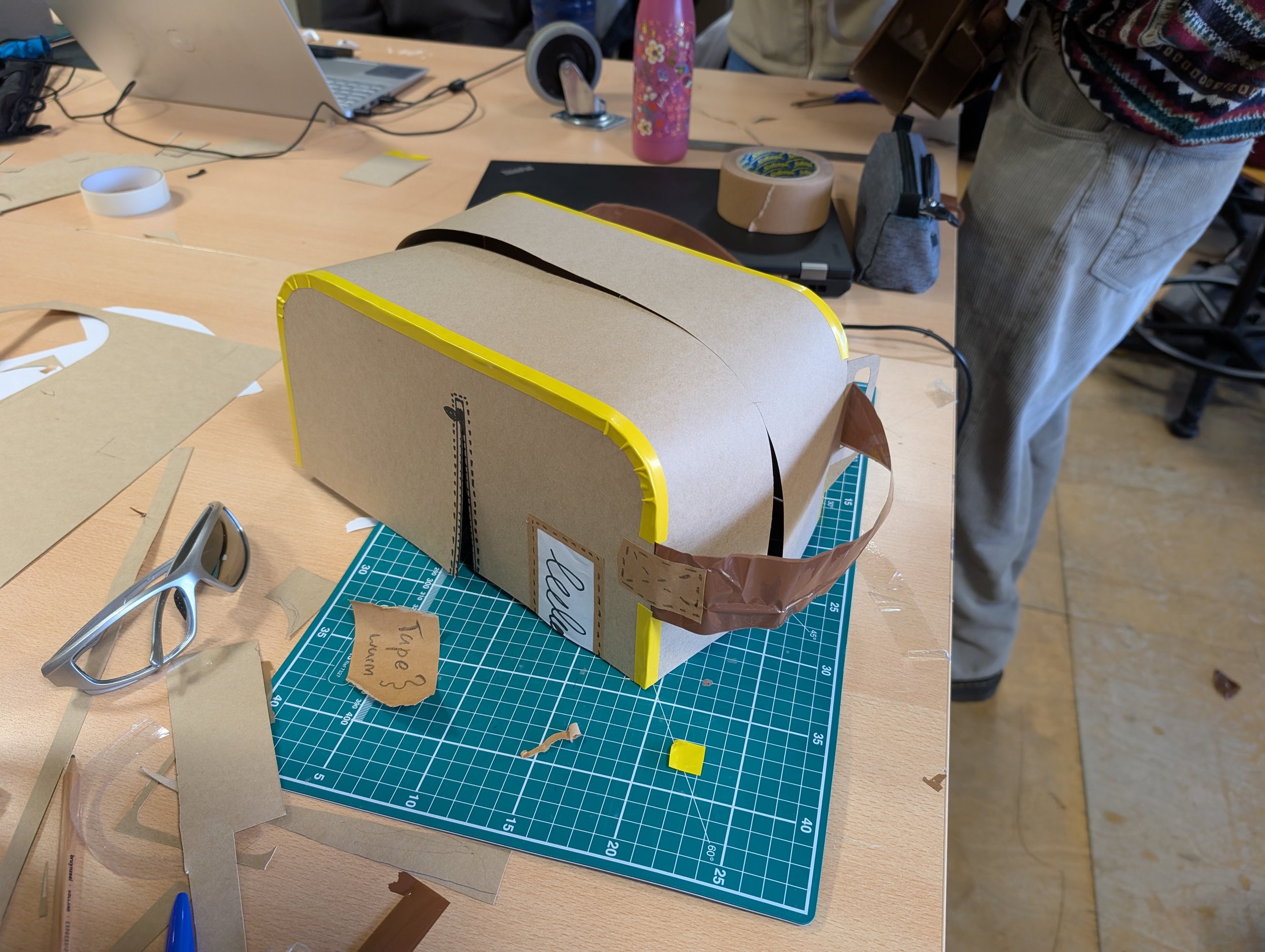
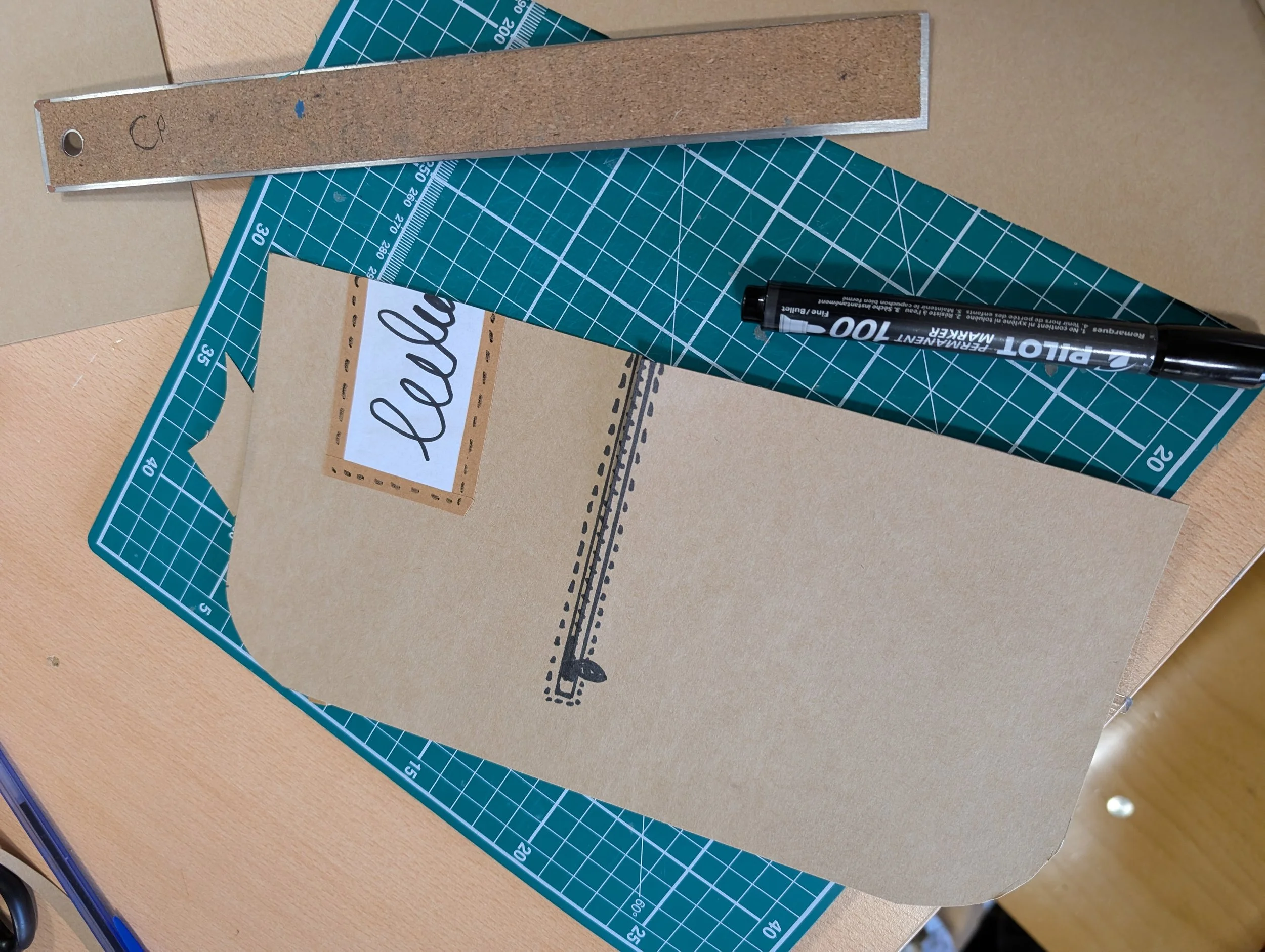
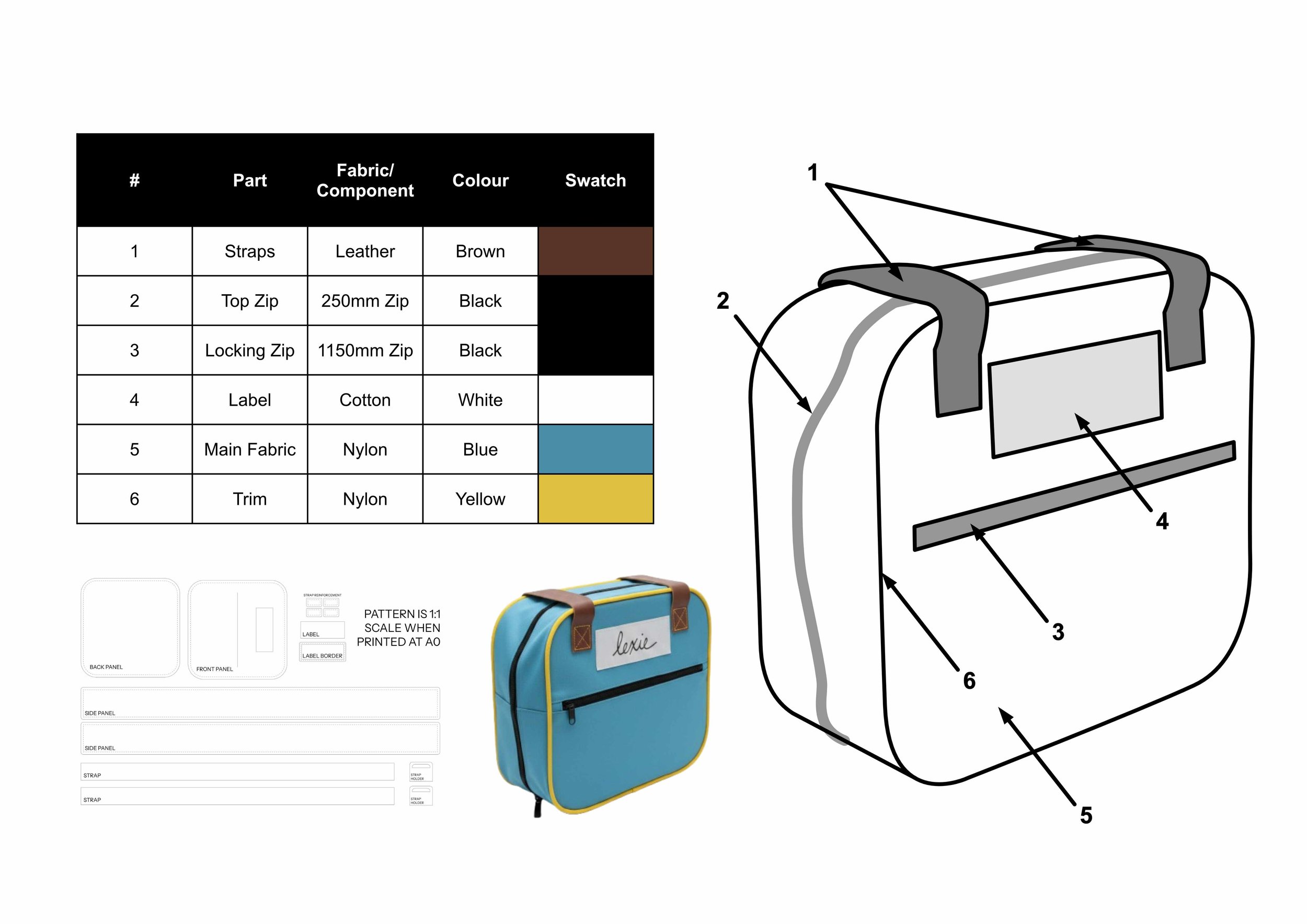
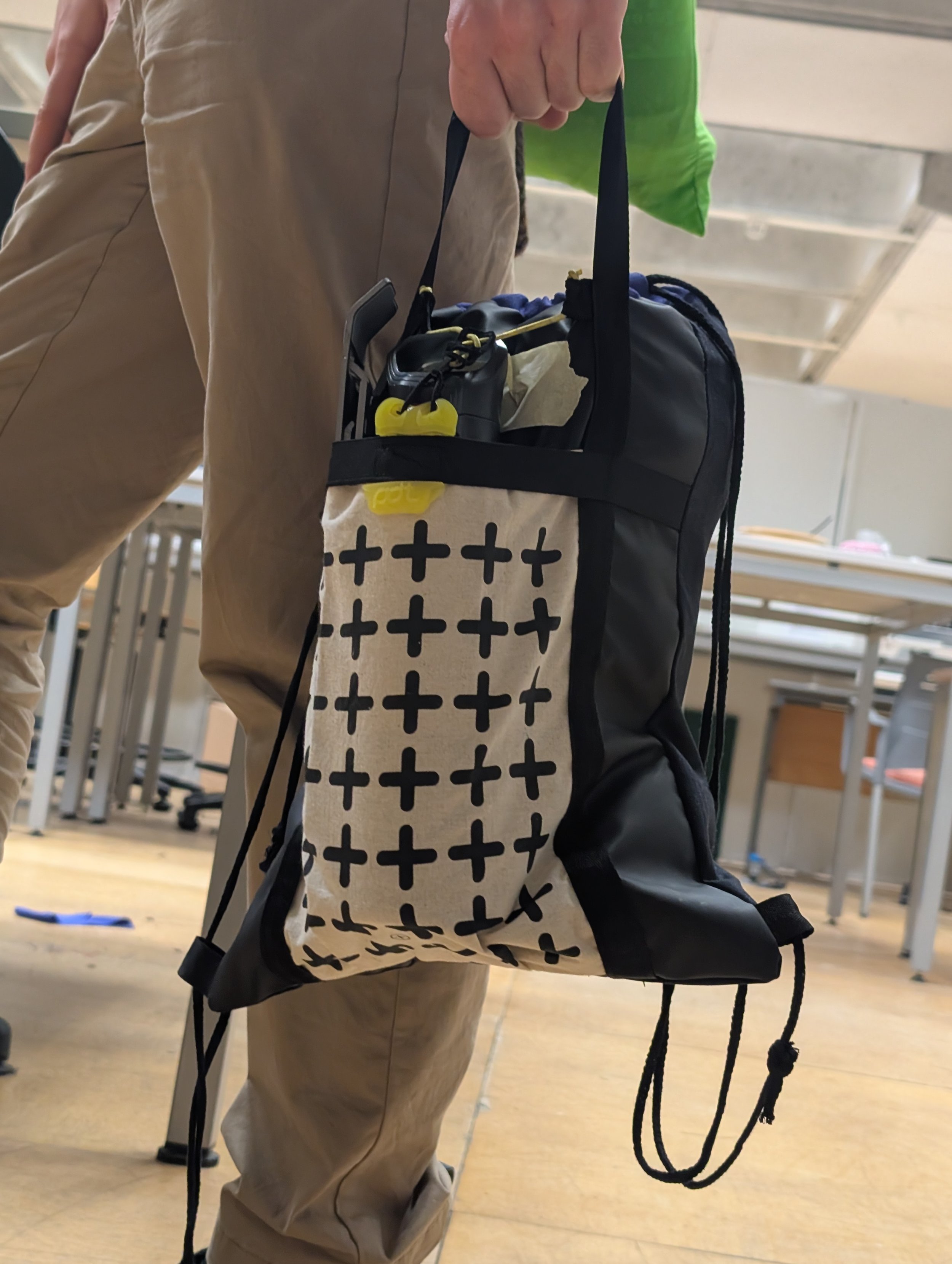
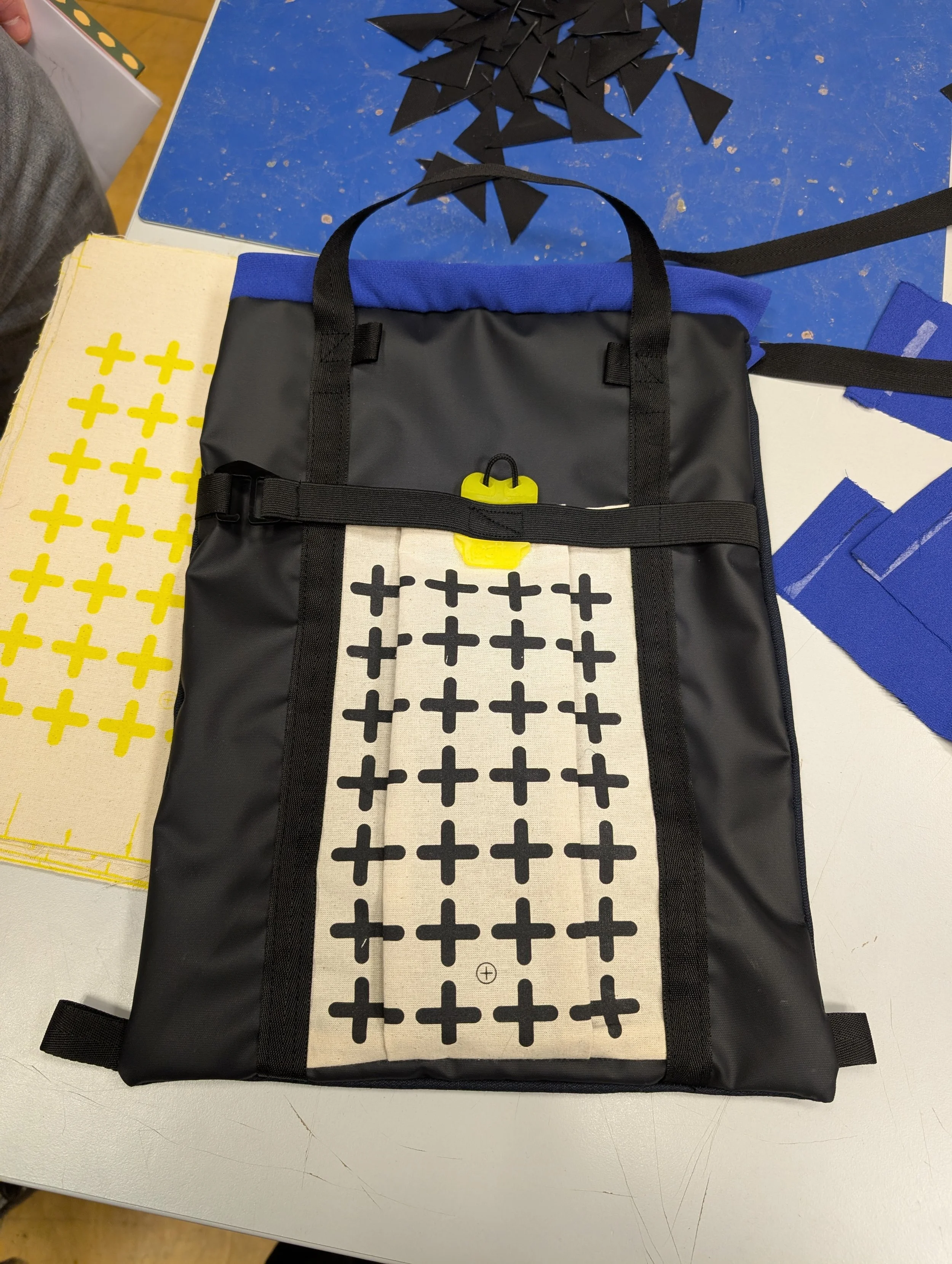
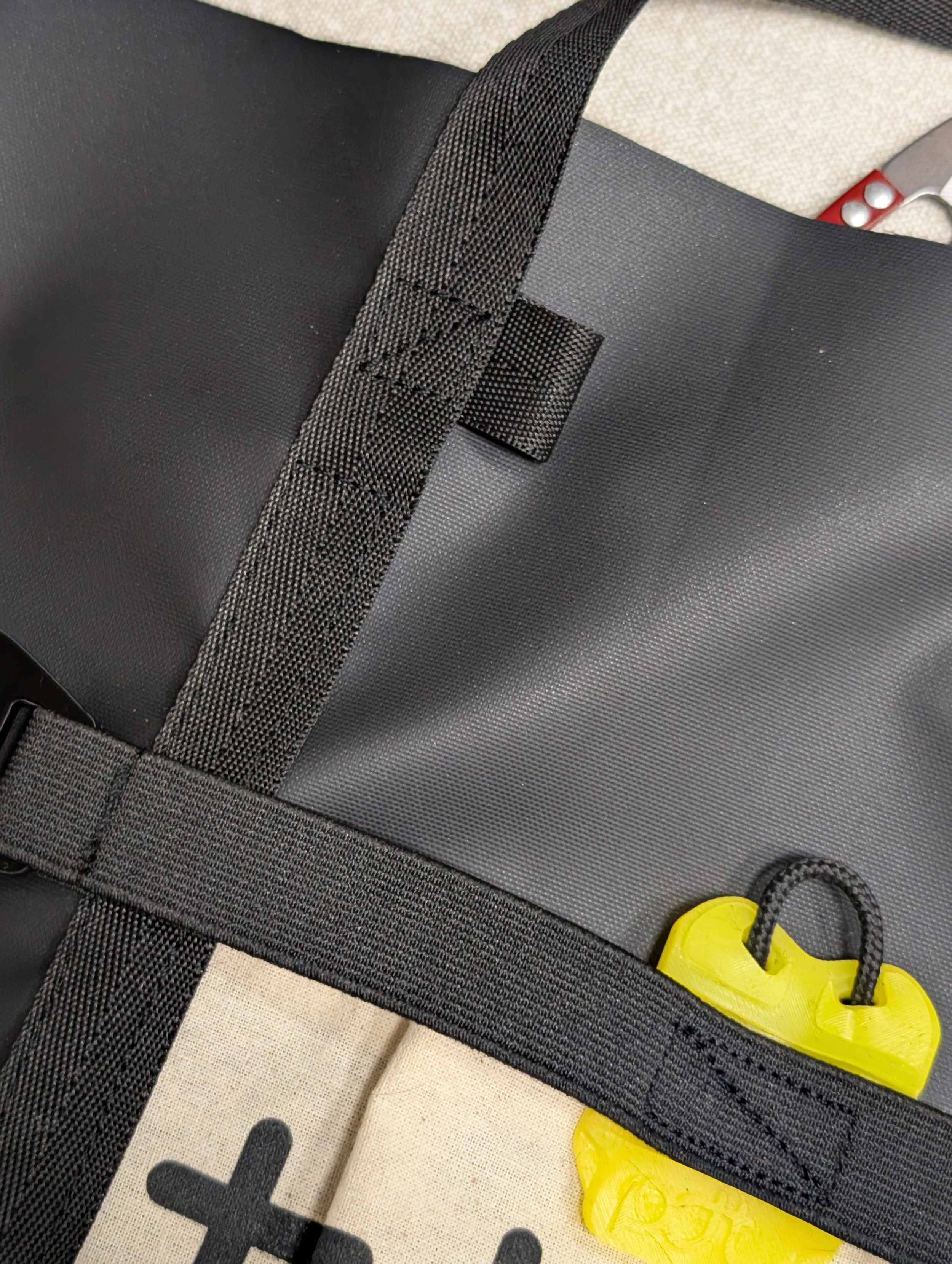
The process began with a steep learning curve focused on manufacturing basics, where I transitioned from having almost no sewing experience to focusing on high-quality stitching and alignment while assembling a preset drawstring bag. Following this, I utilised Affinity Designer to complete vector drawing tasks, learning how to produce industry-standard assembly documents and 1:1 scale patterns. Ideation for the custom backpack centred on adaptability, exploring accordion-style middle sections and expandable zippers to transition the bag between compact and expanded capacities. I built half-scale card models using tape to test how this volume transition would work in practice and to refine the shoulder strap geometry to ensure it accommodated the shifting size comfortably.
Final Design
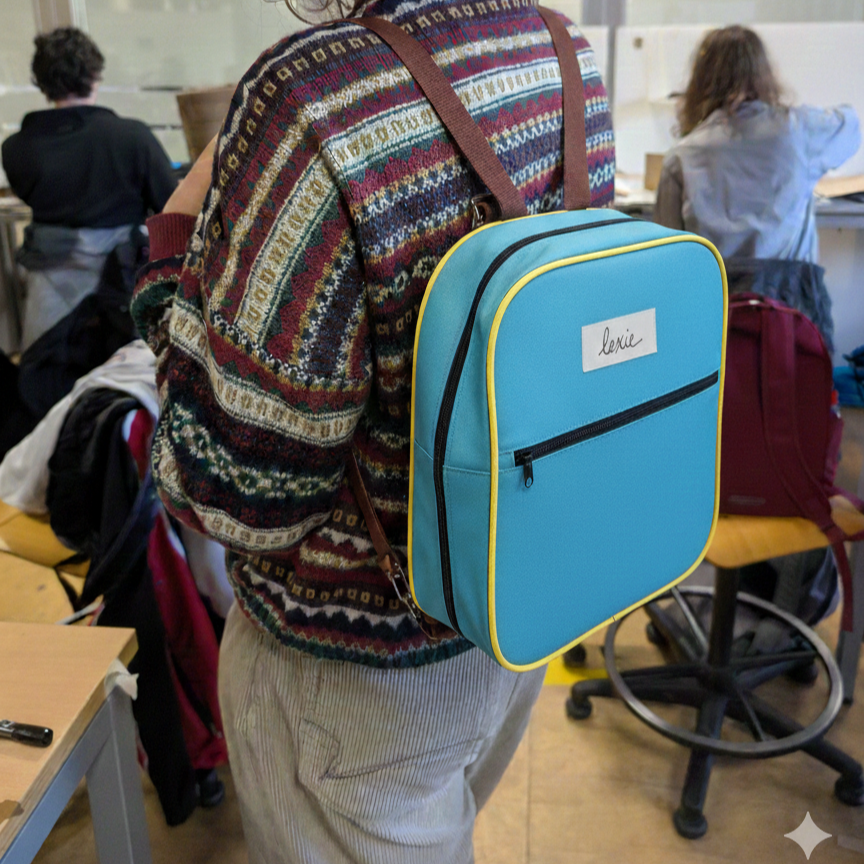
The final bag is a modular backpack that successfully balances a compact form with extra storage capacity when needed. It features a central locking zip mechanism that allows the front and back panels to separate, expanding the nylon fabric body to accommodate larger loads. The design incorporates rounded corners that extend wider than the shoulders for ergonomic comfort, alongside adjustable brown leather straps. The assembly document specifies a blue nylon main body accented with yellow nylon trim and a white cotton label, with an extra strong rim at the base so the bag can be carried horizontally or stand independently without collapsing.
Impact & Reflection
Moving from a guided production line to designing a custom pattern provided a much clearer perspective on the entire lifecycle of soft goods. The physical prototyping phase was particularly essential for ensuring the bag maintained its comfort and usability even when fully expanded to its maximum capacity. Bringing together diverse skills from across the course, ranging from digital vector drawing to physical hands-on sewing, resulted in a highly professional final assembly document. Ultimately, the flexibility of the cut-and-sew approach proved highly rewarding, providing a solid technical foundation in soft goods that I am excited to apply in future design work.